EdenPay in Arabic, right to left.
EdenPay served blue-collar workers across the UAE, but never in Arabic. I led its first Arabic, right-to-left build to open Saudi Arabia.
EdenPay ran in the UAE, but never in Arabic. I led its first Arabic, right-to-left build for Saudi Arabia.
EdenPay had never shipped in Arabic. Reaching Saudi Arabia meant more than translation: every flow had to satisfy SAMA banking rules and Saudi law, and read naturally right-to-left.
I led the first Arabic, RTL EdenPay end-to-end: audited every UAE flow, re-mapped it to Saudi compliance, scoped a focused MVP, and built an Arabic-variant design system.
Opened Saudi Arabia, a ~$38B-a-year remittance market, and signed three major clients including STC.
01 · The opportunity
After the UAE, Saudi was next.
EdenPay already served the UAE's blue-collar workforce in English, Hindi, Tamil and Telugu, languages that fit a largely South Asian labour force. Saudi Arabia was different. Its construction boom for Vision 2030 runs on workers drawn heavily from Egypt, Sudan, Yemen and Syria, so Arabic is their first language, not a second one. That, plus one of the world's largest remittance corridors, made an Arabic, right-to-left build the way in. I led it from the design side.
EdenPay served the UAE's largely South Asian workers in English, Hindi, Tamil and Telugu. Saudi's construction workforce is drawn from Egypt, Sudan and Yemen, Arabic-first. That, plus a huge remittance market, made an Arabic build the way in. I led it from design.
2021
2022
2023
2024
2025
2026
Construction market value, $bn. 2025–26 projected (hatched). Directional; industry estimates and the Vision 2030 pipeline.
Read each bar as 100 blue-collar workers. In the UAE the workforce is overwhelmingly South Asian, so English and Hindi covered it. In Saudi, Egyptians, Yemenis, Sudanese and Syrians push the Arabic share to roughly four in ten, which is why we led with an Arabic, right-to-left build.
Each bar is 100 workers. The UAE is mostly South Asian; Saudi's Arabic share is far higher (Egyptians, Yemenis, Sudanese), which is why we built Arabic-first.
Directional, based on GCC labour-market demographics.
02 · The mandate
More than a translation.
This was never a string-swap. I audited every existing UAE flow end-to-end and process-mapped it against a Saudi reality: which steps still held up, which broke under Saudi law and SAMA banking compliance, and which had to be redesigned. Localization, not translation.
Not a string-swap. I audited and process-mapped every UAE flow against Saudi law and SAMA compliance: what held up, what broke, what to redesign. Localization, not translation.
- Audit every existing UAE flow, screen by screen.
- Process-map each against Saudi law & SAMA compliance.
- Scope a focused, compliant MVP for launch.
- Build an Arabic, right-to-left design system to scale it.
03 · Designing for compliance
Same product, different rulebook.
Saudi banking runs on SAMA's rules, and even identity works differently. In the UAE we verified members through their Emirates ID. In Saudi Arabia the equivalent is the Iqama, and verification happens through the phone number registered against it, not the card itself. That one change rippled through onboarding, verification and every downstream flow.
Saudi banking runs on SAMA's rules and a different ID. The UAE used Emirates ID; Saudi uses the Iqama, verified through the number registered against it. That reshaped onboarding and every flow after it.
Identity verified through the Emirates ID, read straight from the card.
Identity verified through the Iqama, via the mobile number registered against it, per SAMA.
04 · Scoping the MVP
Ship the right two things first.
Not everything could, or should, launch on day one. We led with the two flows that mattered most to workers, Money Transfer and Mobile Recharge, and deliberately deprioritised loans. Sharia-compliant lending under Saudi and Islamic finance law is far heavier to run, so holding it back was the honest call for a focused, compliant MVP.
Not everything could ship at once. We led with Money Transfer and Mobile Recharge, and deprioritised loans, since Sharia-compliant lending is far heavier to run in Saudi. A focused, compliant MVP.
- Shipped first: Money Transfer & Mobile Recharge, the everyday flows.
- Held back: loans, compliance-heavy under Saudi & Islamic finance law.
05 · Designing right-to-left
It's not just a mirror.
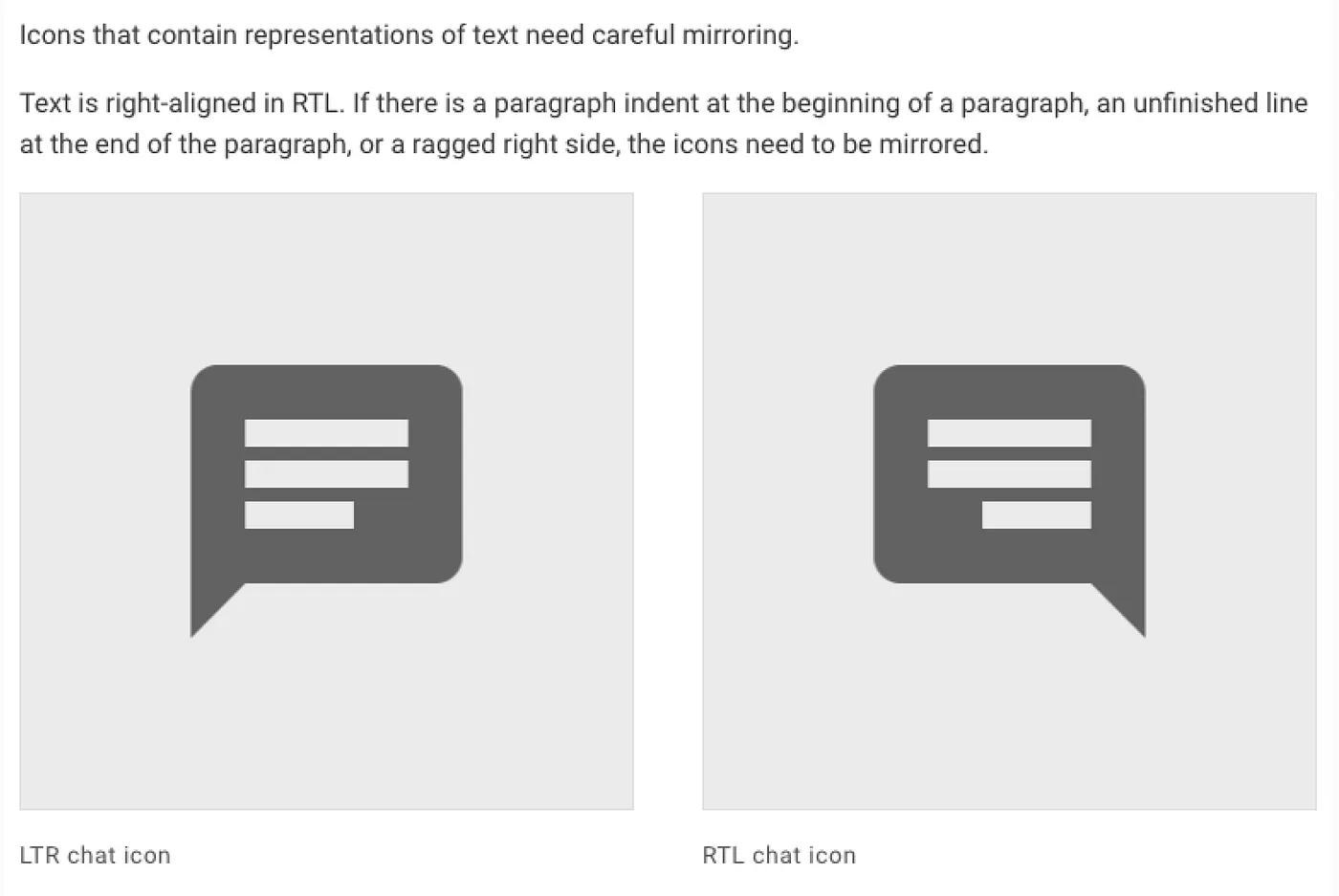
Flipping the layout is the easy 20%. The rest is knowing what to mirror, what to leave alone, and how Arabic actually wants to be read. These are the rules I worked to, and how each showed up in EdenPay.
Flipping the layout is the easy part. The rest is knowing what to mirror, what to leave alone, and how Arabic wants to be read. The rules I worked to:
01Mirror what carries direction
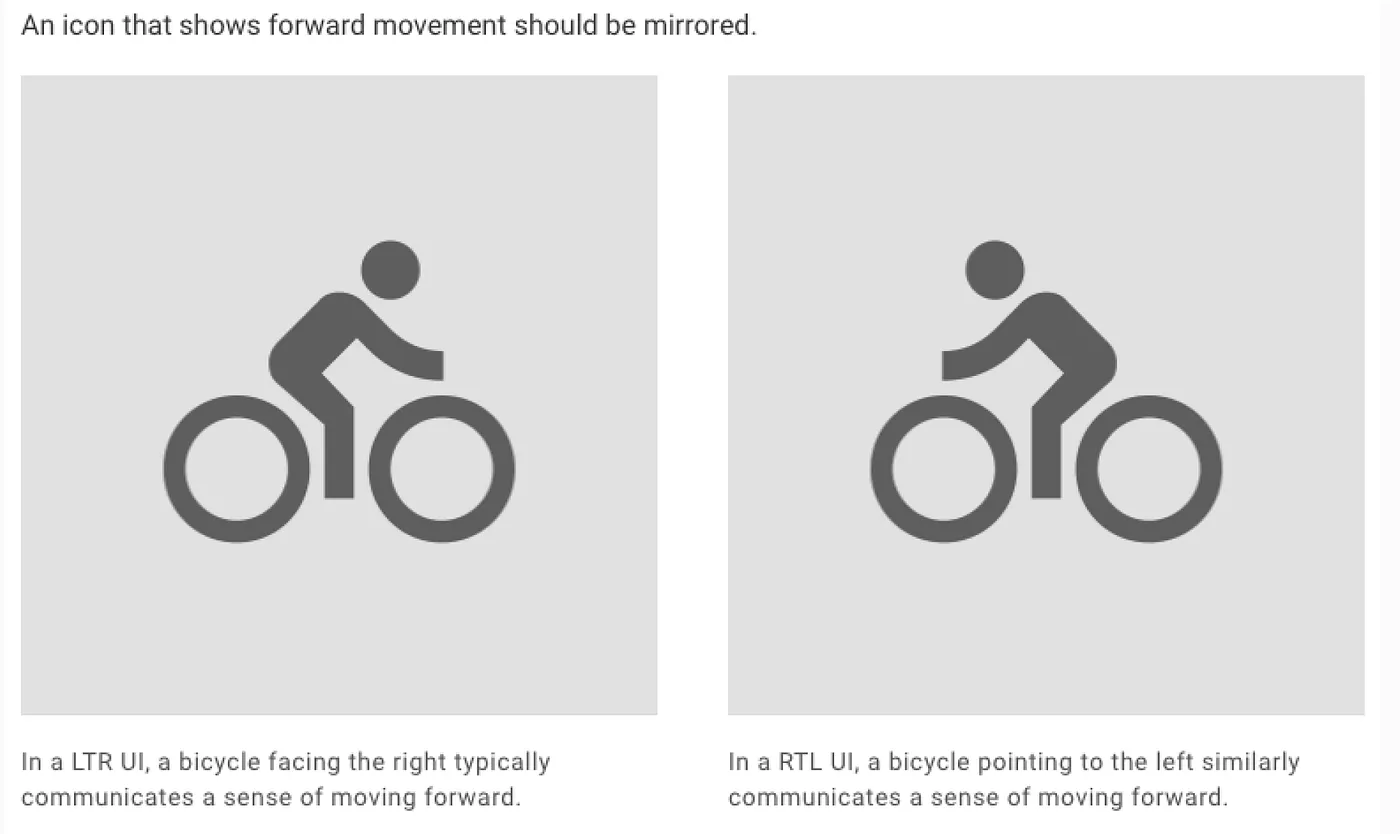
Anything that says "forward" or "back" flips with the reading direction, navigation arrows, progress, a bicycle moving ahead. Right becomes left.
02Leave the rest alone
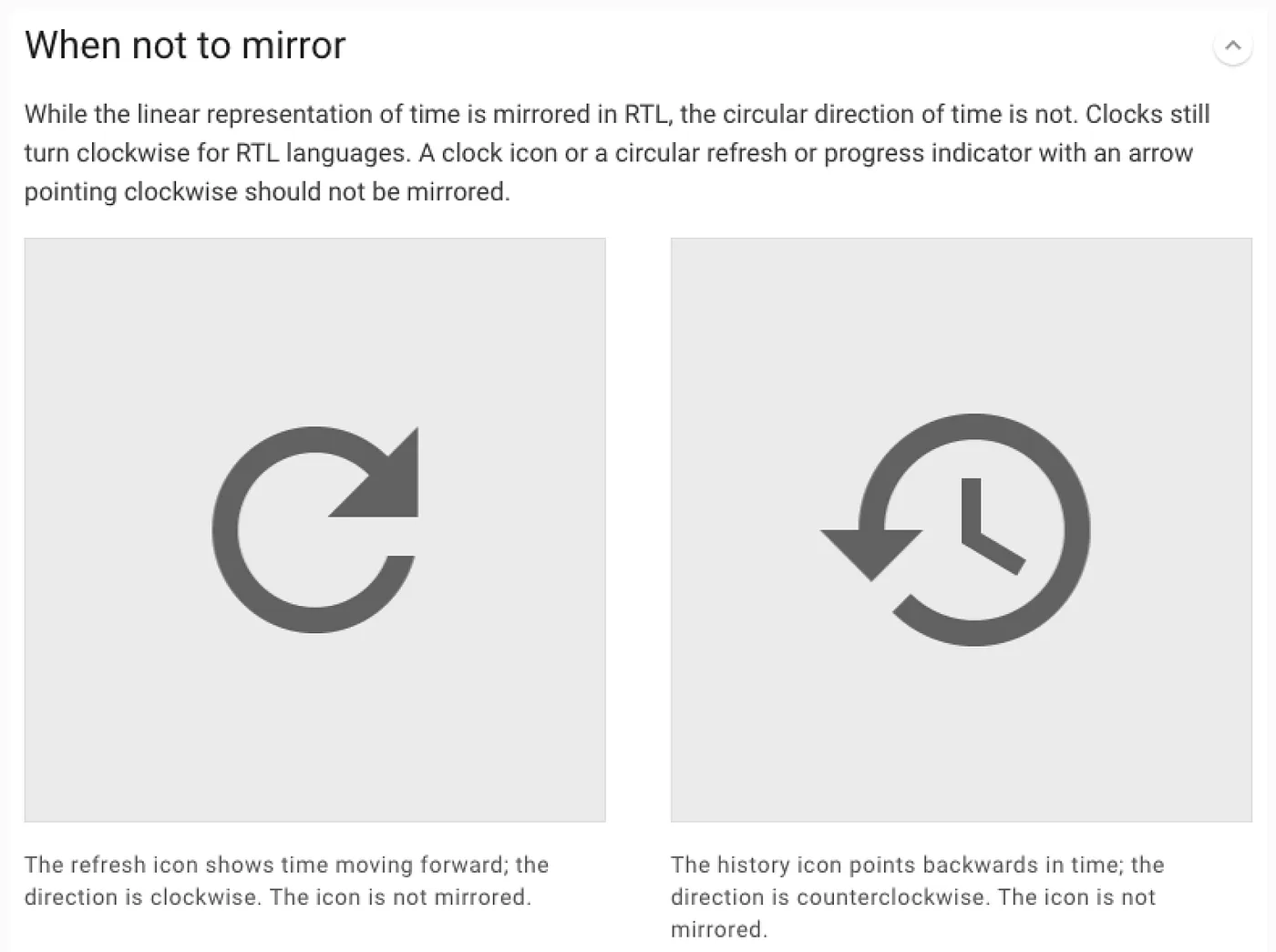
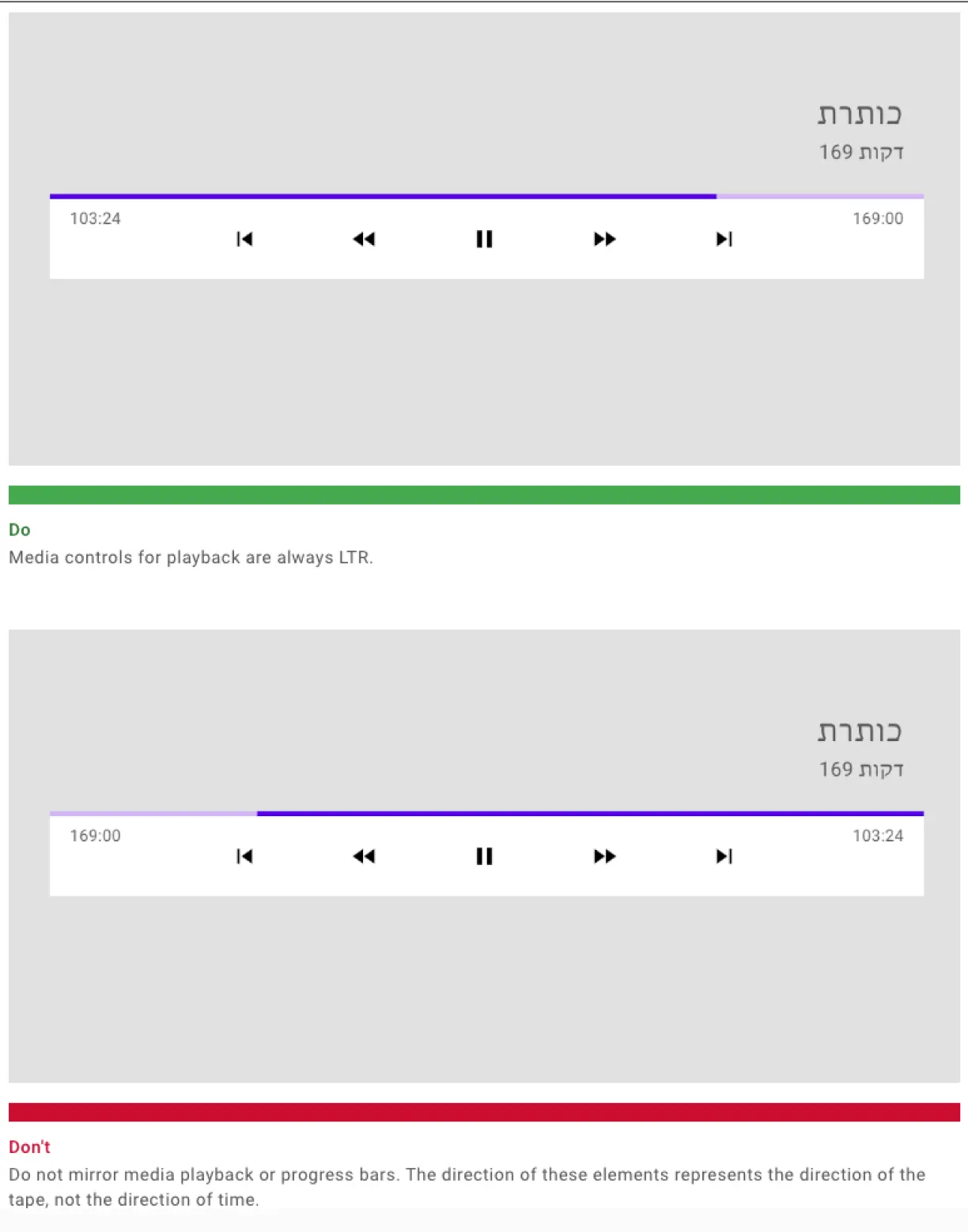
Clocks still turn clockwise, refresh and history icons keep their real-world direction, and logos, play buttons and media controls never flip. Mirror meaning, not everything.
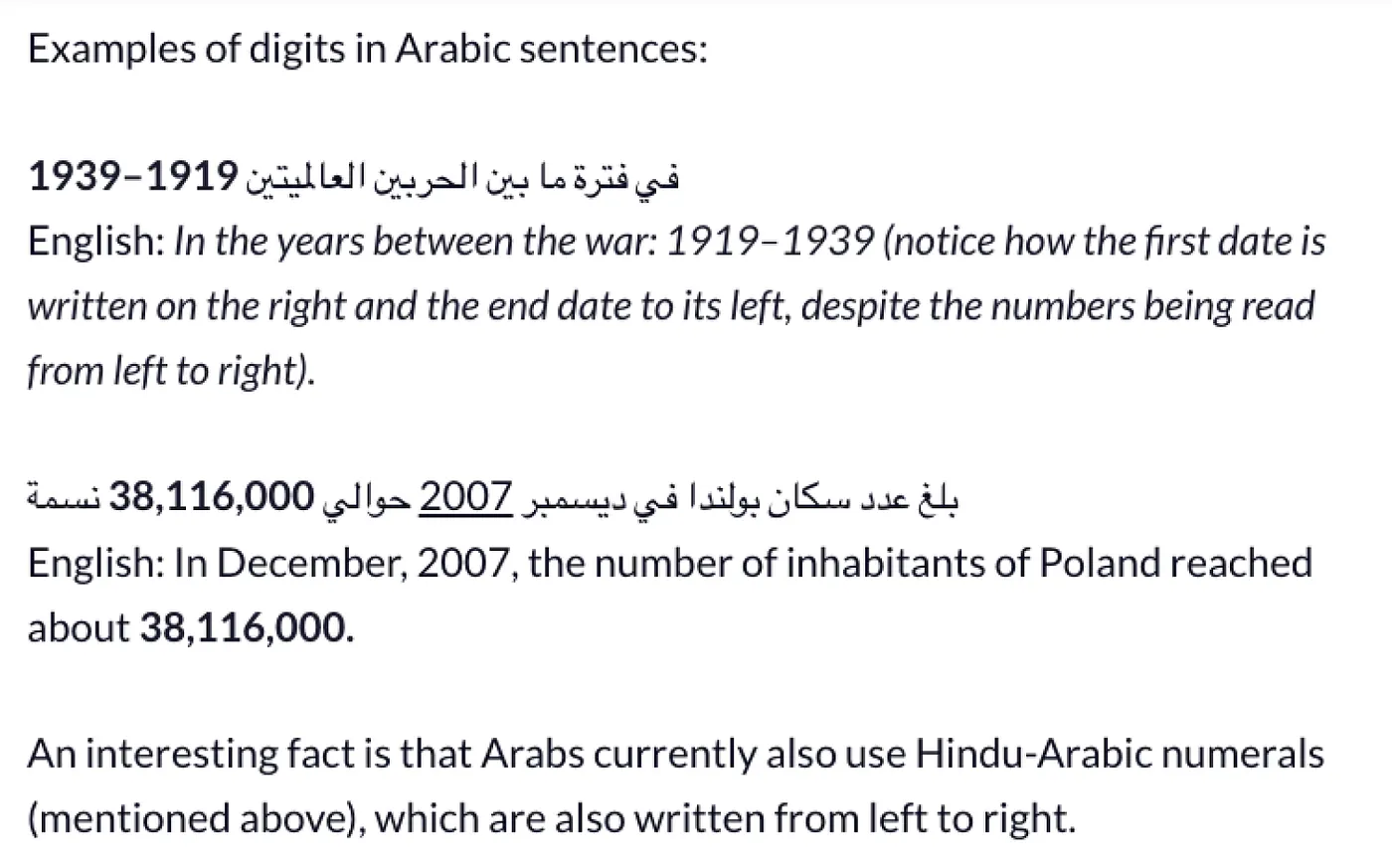
03Numbers still run left-to-right
Even inside right-to-left text, digits are read left-to-right, and so are dates, amounts and phone numbers. SAR amounts and totals never flip.
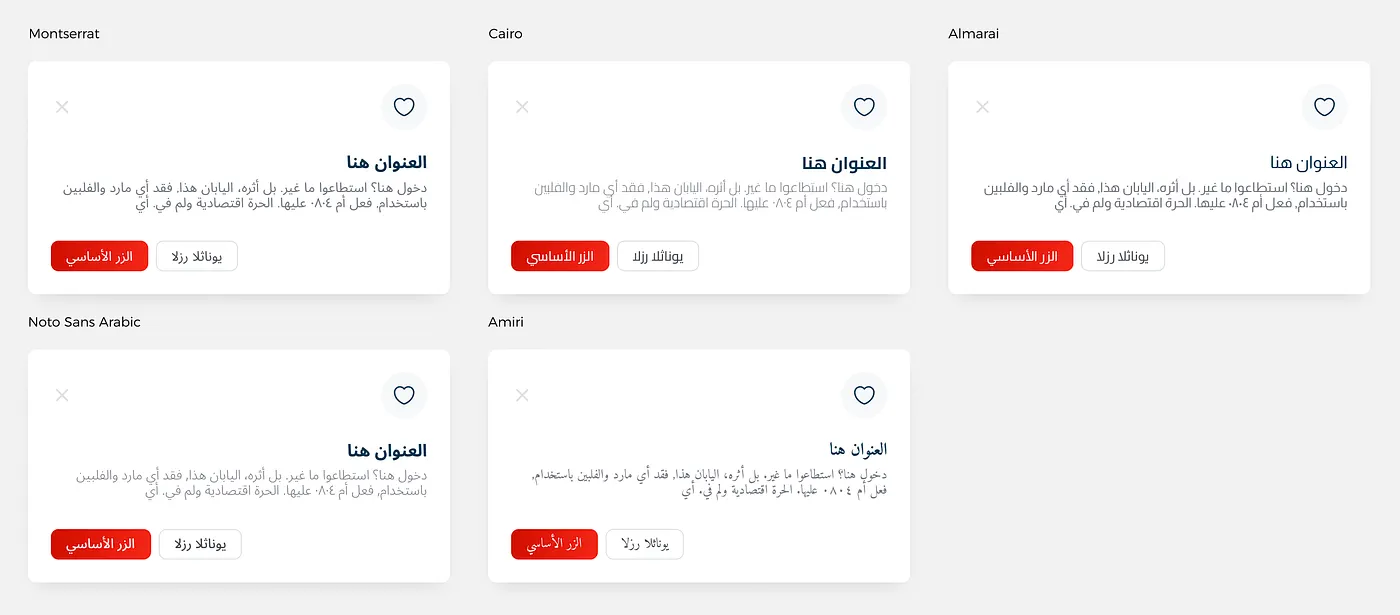
04Use a real Arabic typeface
Latin fonts fall apart in Arabic. I explored proper Arabic families, Cairo, Almarai, Noto Sans Arabic, for legibility at small sizes and a tone that matched EdenPay.
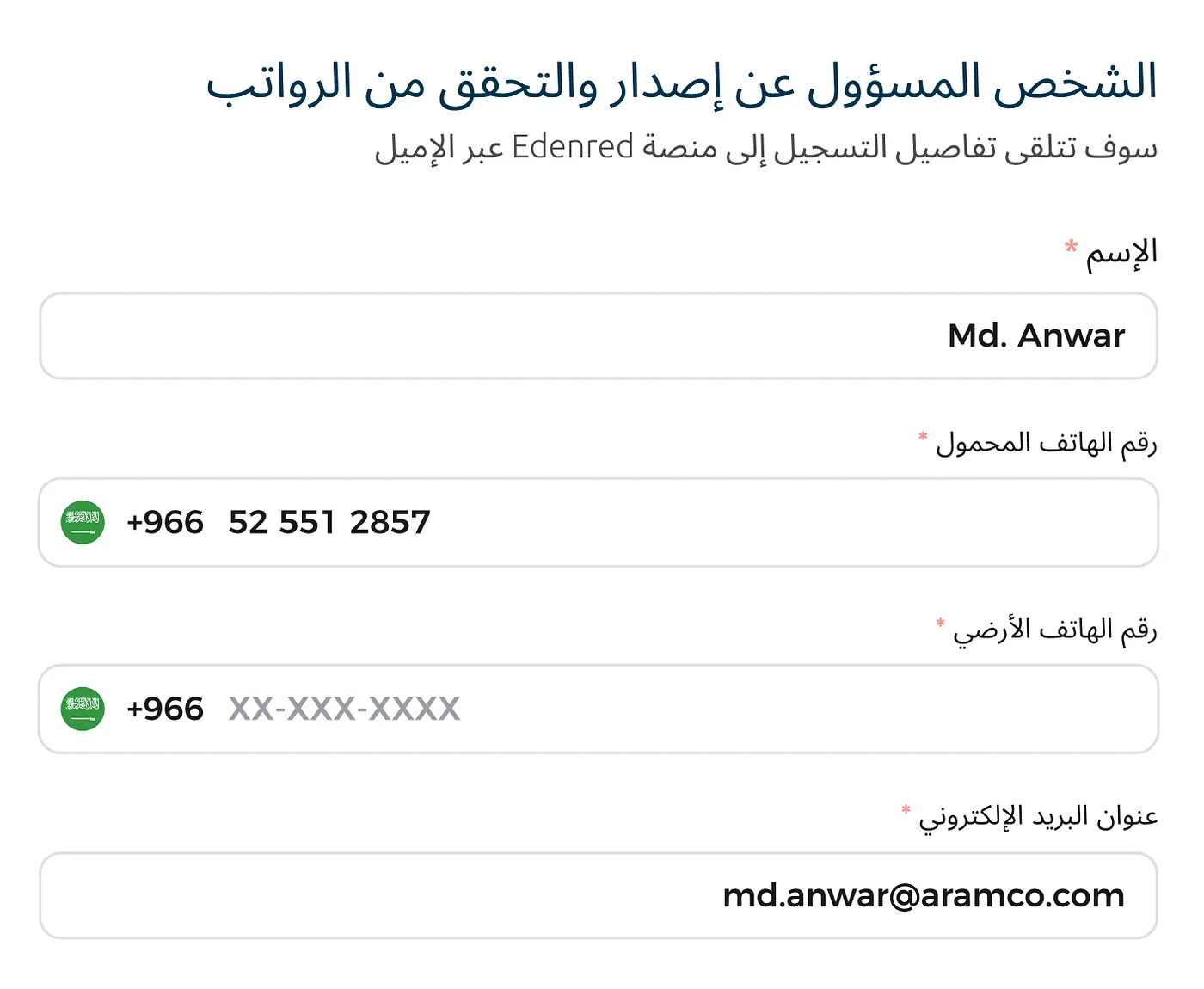
05Input fields need care
Arabic labels align right, but phone-number fields stay left-to-right. And an Arabic-looking field that only accepts English, which we needed to keep our data consistent, quietly confuses people. The field has to signal the language it expects.
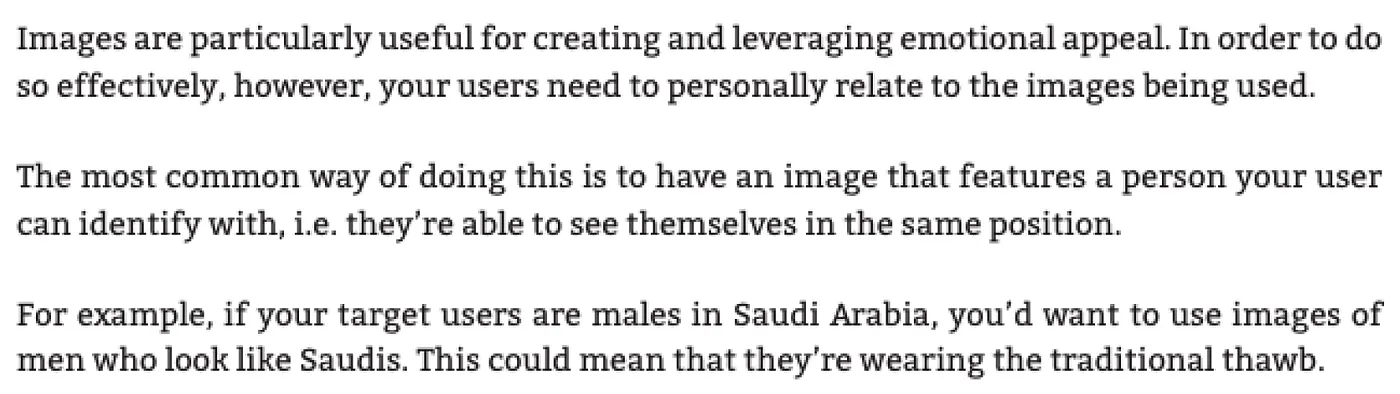
06Imagery has to feel local
People engage with images they can see themselves in. For Saudi workers that means the right faces and dress, a man in a thawb, not a mirrored stock photo from the UAE build.
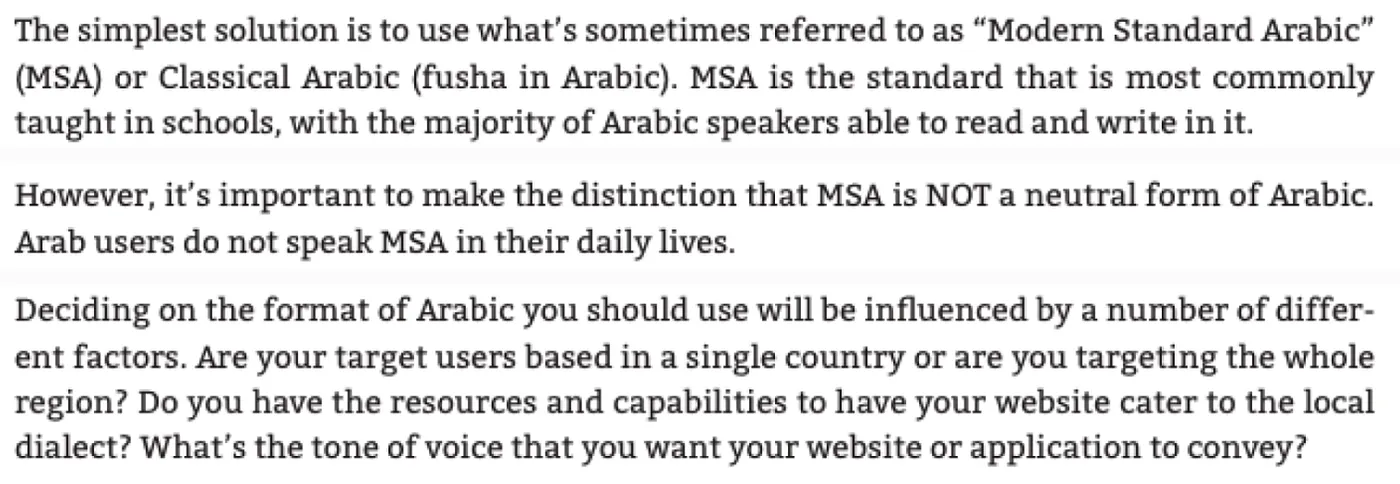
07Decide which Arabic to speak
Modern Standard Arabic reads clearly across the region but isn't how people talk day-to-day. I kept copy in clear, plain MSA, understood by everyone, still warm enough to trust with money.
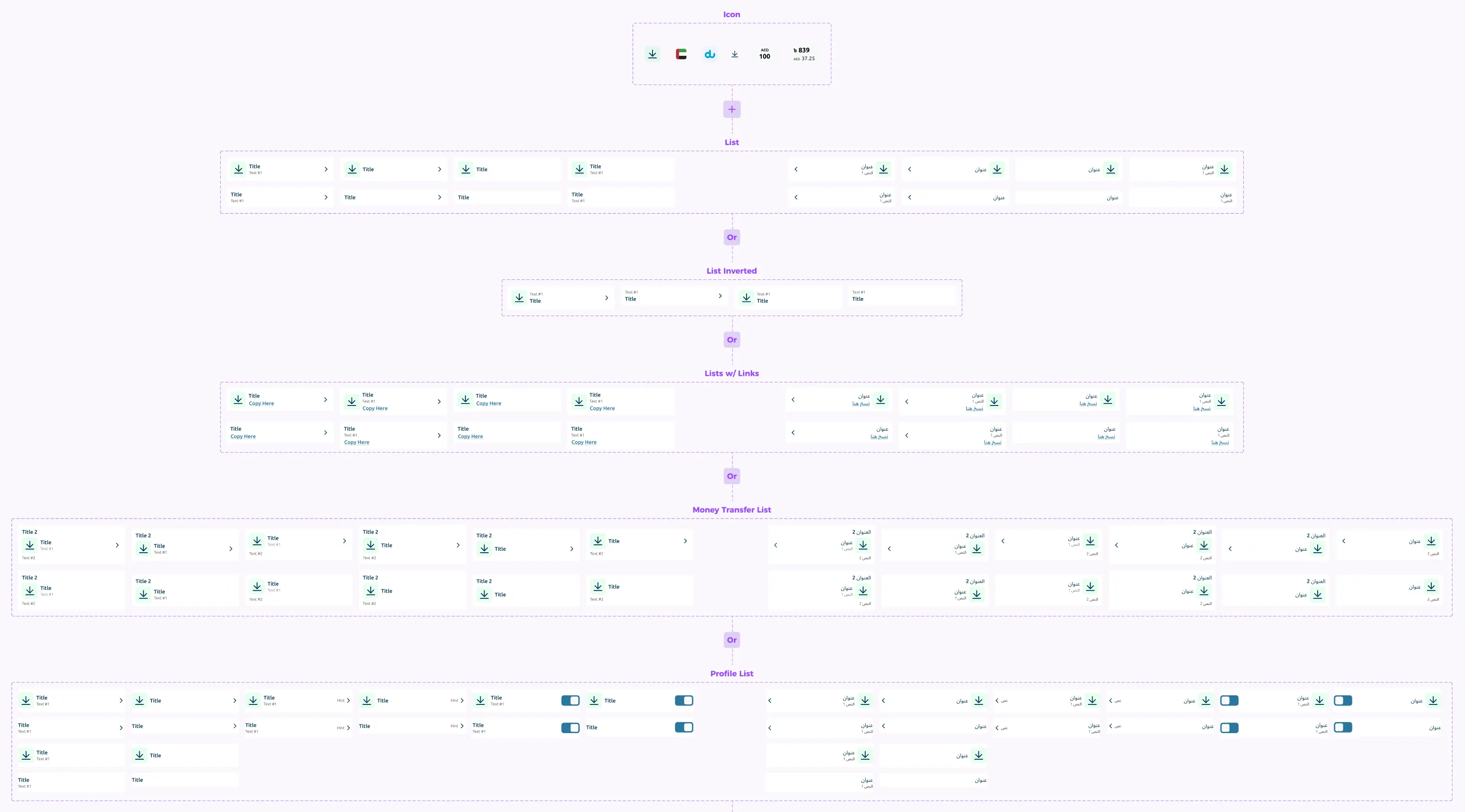
08One system, two directions
Rather than mirror screens one by one, I built Arabic variants into the design system, so every component knows how to face both ways and the whole app scales, not just the launch flows.
06 · Side by side
The same screen, both ways.
The clearest way to see the work is to set the two builds next to each other. Same flow, same components, every element re-thought for right-to-left, from the nav and labels to the keyboard's own direction.
The clearest test is side by side: the same flow, every element re-thought for right-to-left, down to the keyboard's direction.
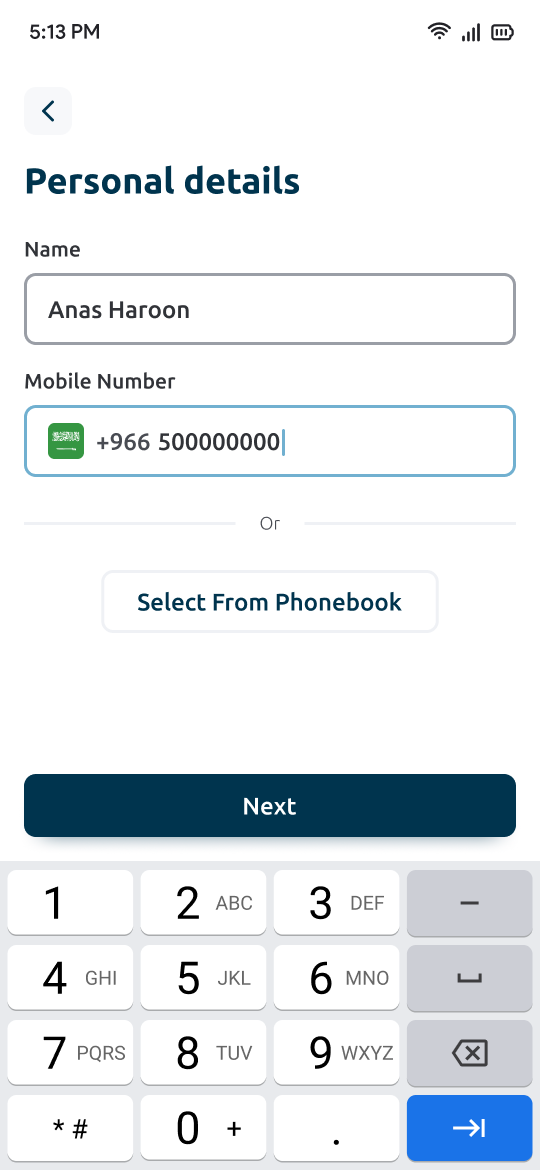
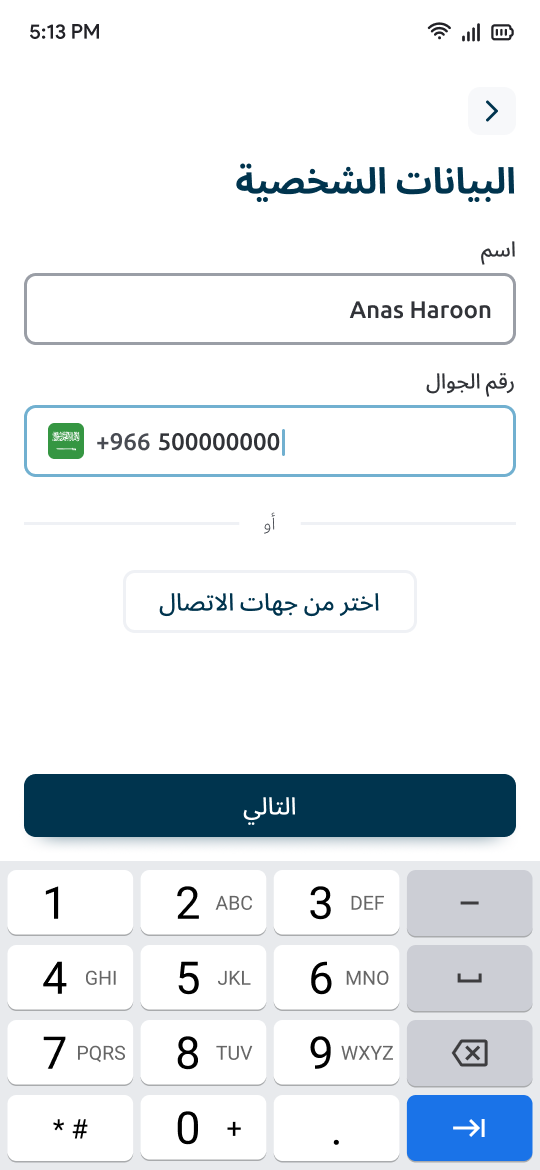
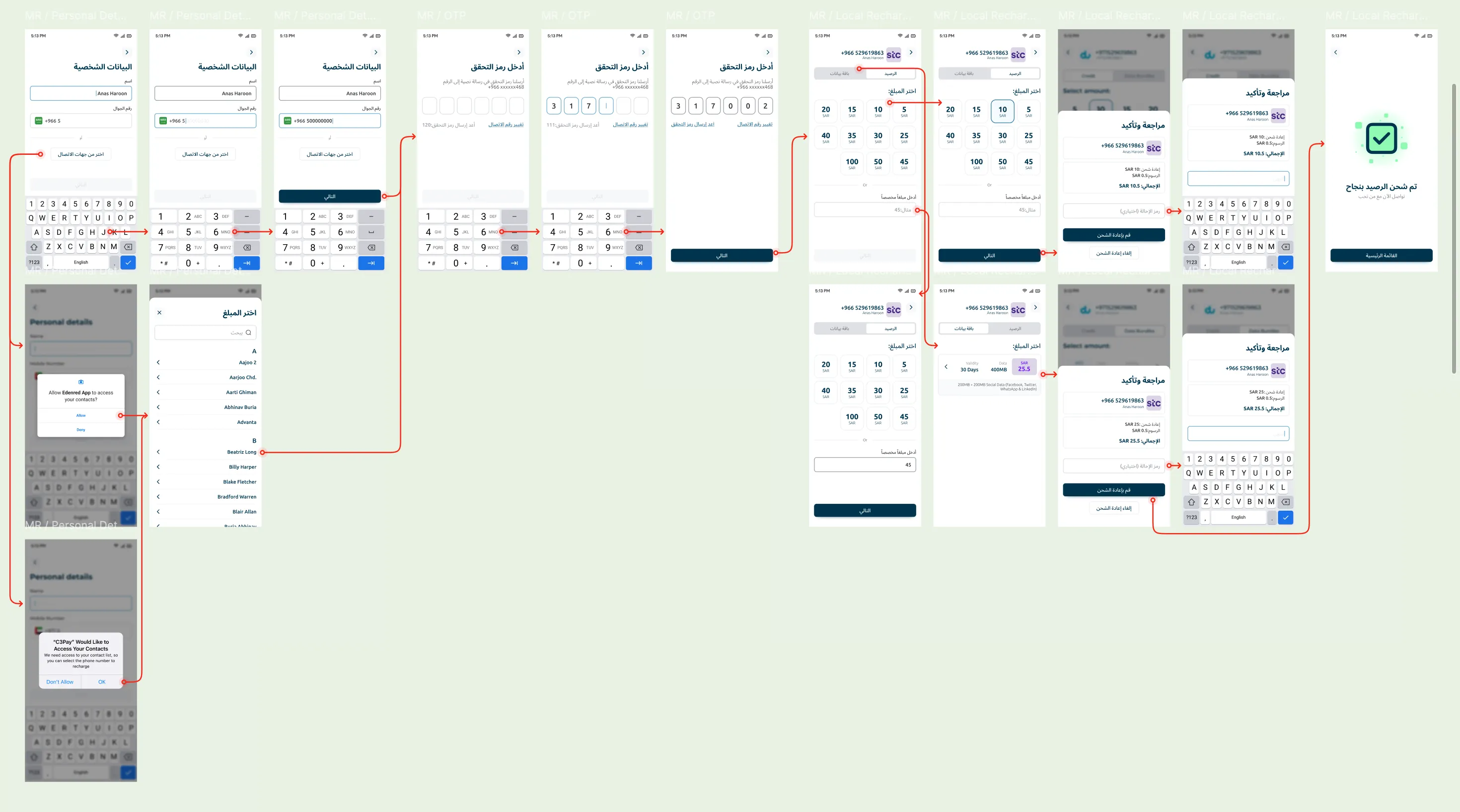
Personal details. The back arrow, labels and the keyboard's forward key all switch sides, while the phone-number field stays left-to-right.
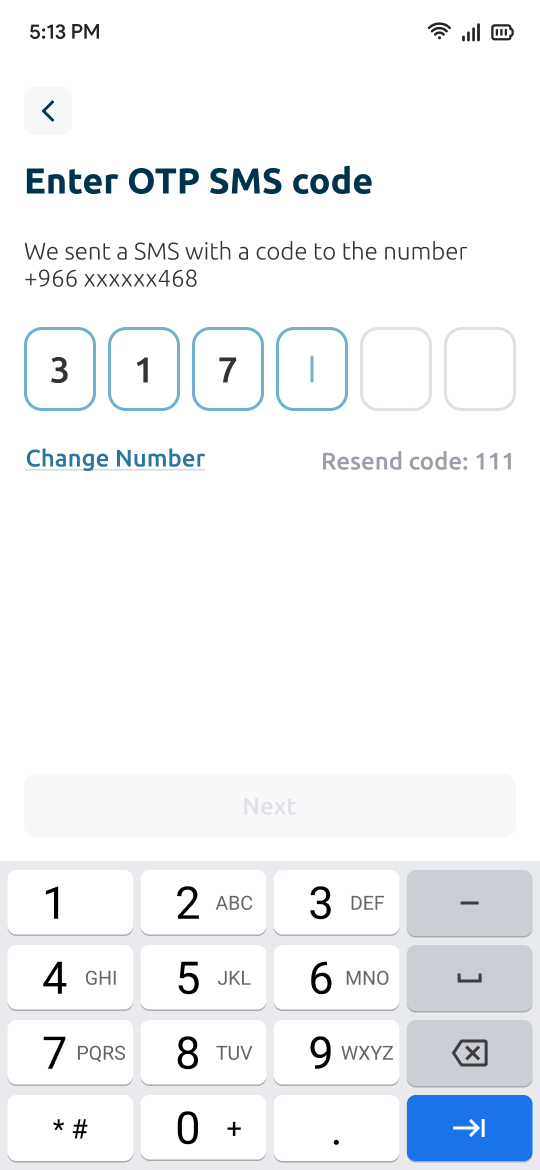
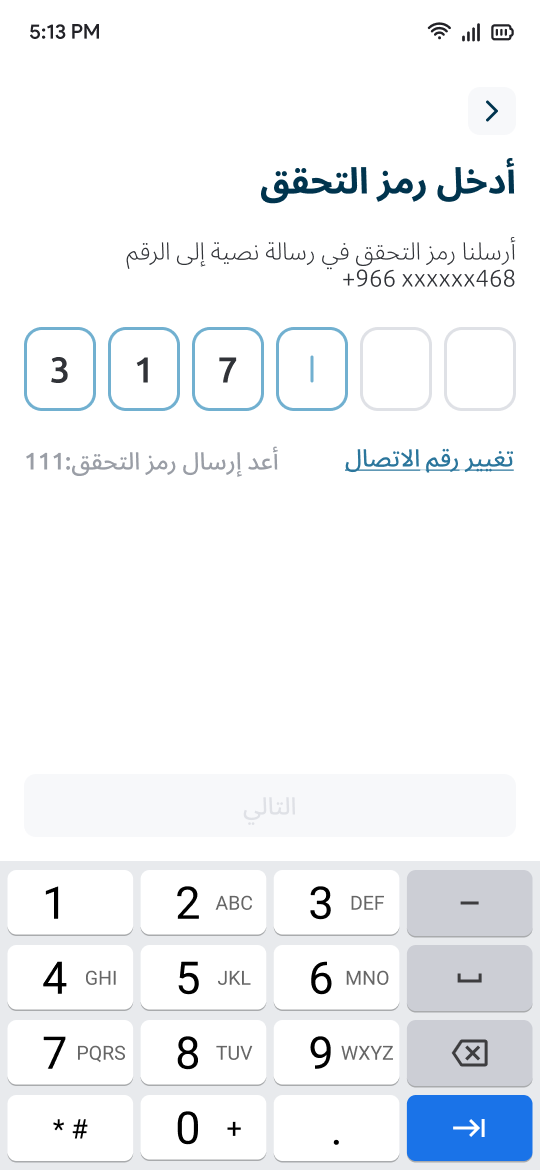
Verify the number. The OTP boxes fill from the right, and "Change number" and "Resend" swap positions to match.
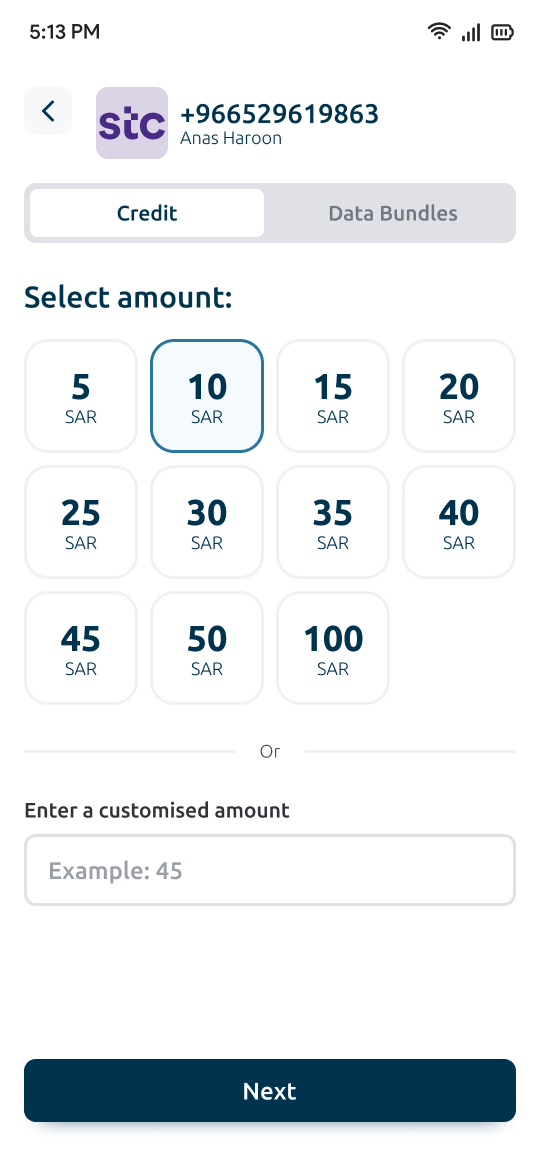
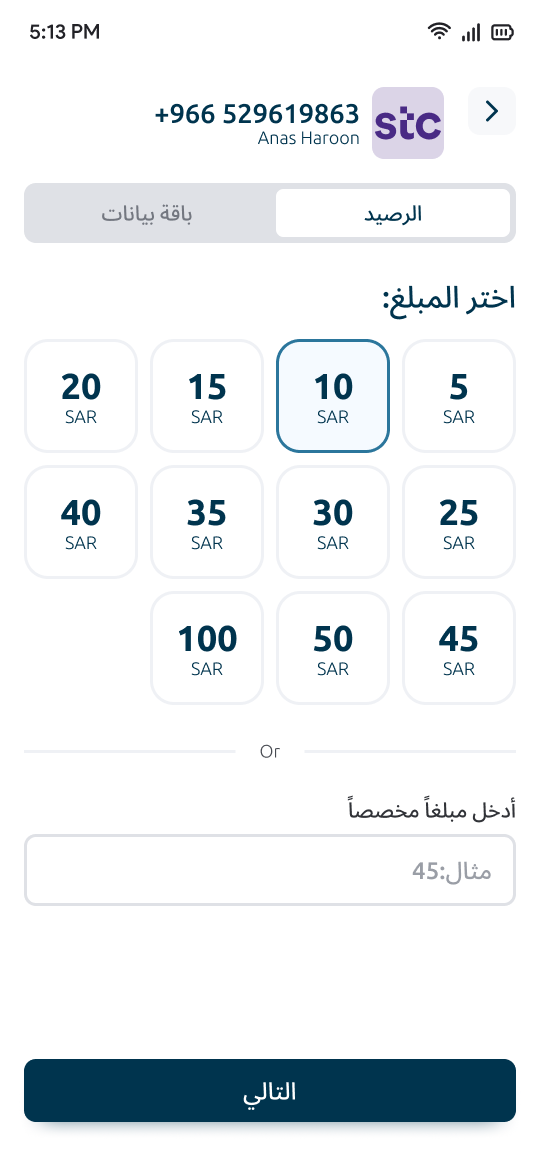
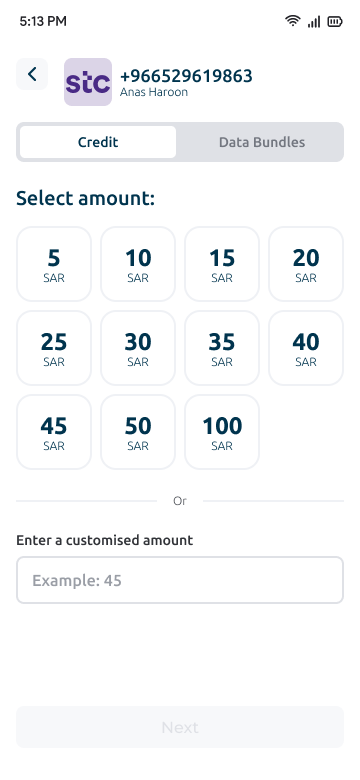
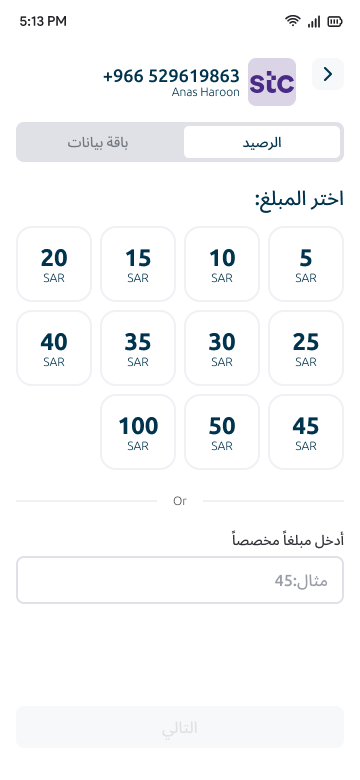
Choose an amount. The header, tabs and the whole SAR grid reverse, yet the numbers themselves keep reading left-to-right.
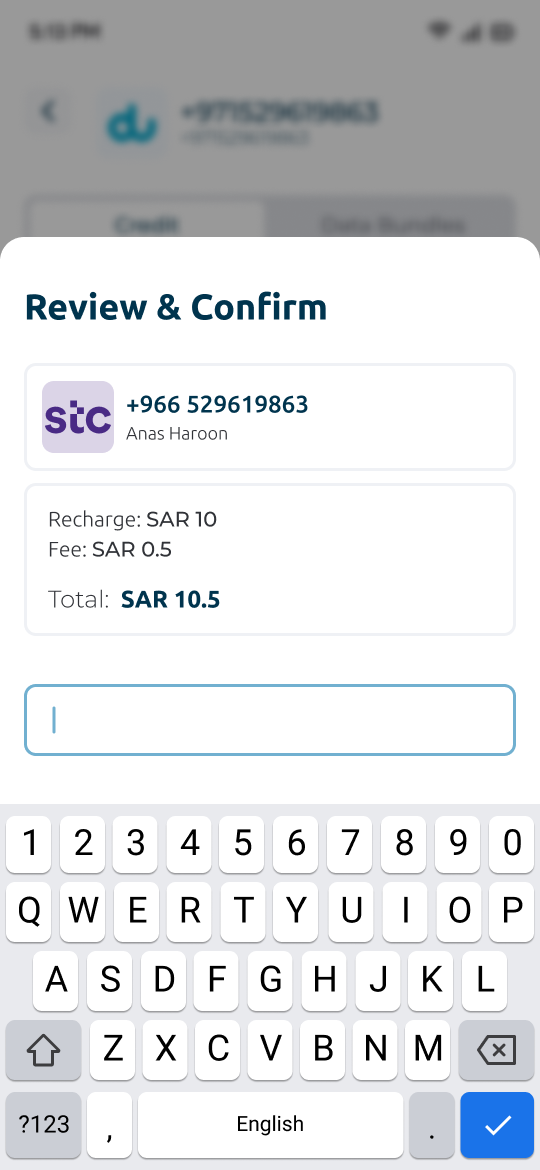
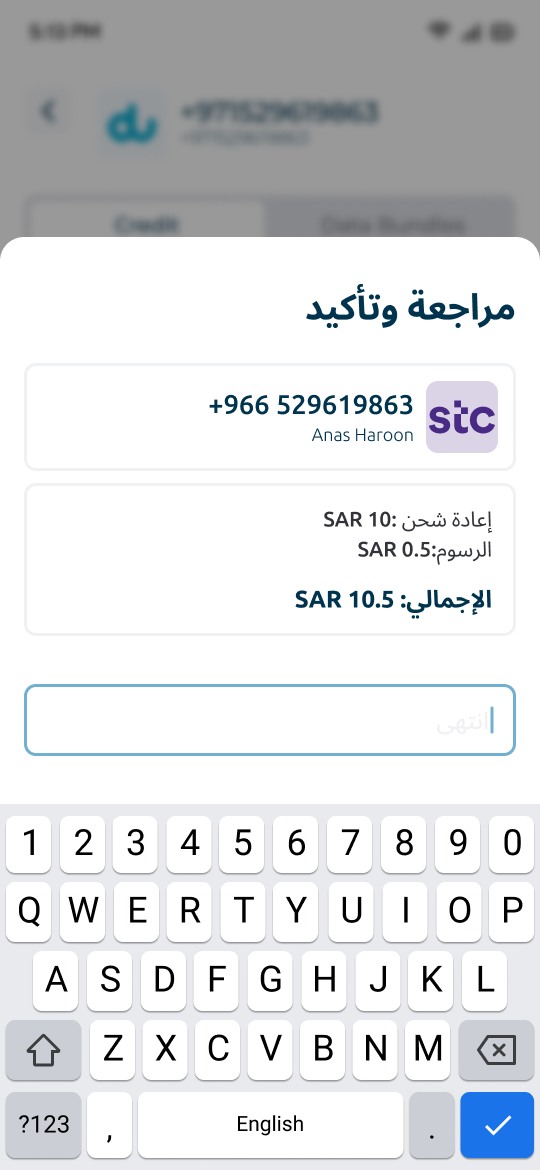
Review & confirm. Summary rows right-align, while the amount, fee and total stay left-to-right and unmistakable.
07 · Testing with real users
Tested with the people who'd actually use it.
We put the flows in front of 20 Arabic-speaking users, largely blue-collar workers with the same tech literacy as our real audience. Most were Egyptian, Sudanese and Syrian, the nationalities that make up the core of EdenPay's Saudi user base. The sessions gave us strong signal, and two clear improvements came straight out of them.
We tested with 20 Arabic-speaking users, largely blue-collar with real-world tech literacy. Most were Egyptian, Sudanese and Syrian, the core of EdenPay's Saudi audience. Two clear improvements came out of it.
The two insights we acted on
An Arabic field that only spoke English
The field read right-to-left, but only accepted English, which we needed to keep our data sheets consistent, so people typed Arabic and hit a wall.
The fix: English-only fields now read and behave left-to-right, signalling the language they expect before anyone types.
Navigation moving the wrong way
The next screen slid in from the right, but Arabic users read right-to-left, so they expected forward to come from the left.
The fix: I flipped the transition, so moving forward now enters from the left, matching how Arabic progresses.
08 · Delivering with engineering
Designs are only real once they ship.
Getting Arabic right in Figma was half the job. The other half was making sure engineering could build it exactly. I worked closely with the tech team through delivery, handing over the updated components with everything they needed to ship them without guesswork, and gave translations a single source of truth so copy stayed consistent across languages.
Getting Arabic right in Figma was half the job. I worked closely with engineering through delivery, handing over updated components with everything they needed, and gave translations a single source of truth across languages.
Shared the updated RTL components with the tech team, documented with the states, mirroring rules and specs they needed to deliver without back-and-forth.
Every string lived in a shared spreadsheet, one row per text component, one column per language, so English and Arabic never drifted apart.
09 · Impact
A new market, opened in Arabic.
The launch opened an entirely new geography for EdenPay: Saudi Arabia, home to one of the world's largest remittance corridors and the construction workforce building Vision 2030. We went live with Money Transfer and Mobile Recharge in Arabic, and signed three major Saudi clients, including STC, on the back of it.
The launch opened a new geography: Saudi Arabia, one of the world's largest remittance corridors. We went live with Money Transfer and Mobile Recharge in Arabic and signed three major clients, including STC.
Even in a fully right-to-left interface, some things never flip. Numbers are still read left-to-right, and clocks still turn clockwise. Getting Arabic right is about knowing what changes with reading direction, and what belongs to the world. I wrote the full playbook up on Medium.
Even in right-to-left, numbers still read left-to-right and clocks still turn clockwise. Full playbook on Medium.